
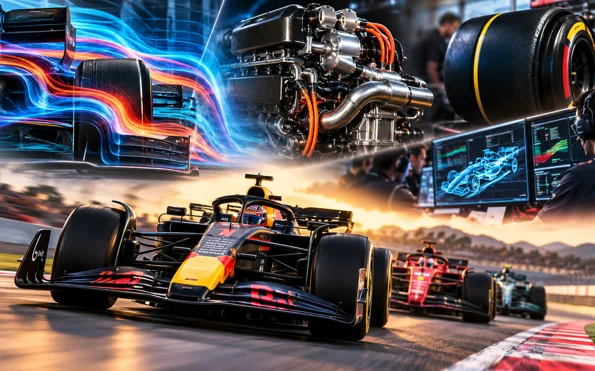
Formula 1 has always been a battle between drivers and teams. But it is also a battle between engineers. A small technical change can make a car faster or slower. It can even change the order of the teams. In the same way that speed matters in an instant withdrawal casino, Formula 1 teams are always looking for faster and more efficient solutions.
Today, new technology plays a bigger role than ever. Teams work on aerodynamics, power units, tires, and car development during the season. Each area can decide who fights for wins and who falls behind.
Aerodynamics Can Make a Huge Difference
Aerodynamics is one of the most important parts of an F1 car. Teams want to create as much downforce as possible. More downforce helps the car stay on the track when it goes through fast corners.
However, there is a challenge. More downforce can also create more drag. This can reduce speed on long straights. Engineers must find the right balance.
Even a small change to a front wing, floor, or rear wing can affect the whole car. A new part may give the driver more grip. It may also make the car easier to control.

This is why teams spend so much time testing new ideas. They use computer models and wind tunnels before bringing parts to a race. If an upgrade works, a team can quickly move closer to its rivals.
Power Units Are About More Than Speed
The power unit is another key part of modern Formula 1. It must produce a lot of power, but it must also be efficient and reliable.
Modern F1 power units combine an internal combustion engine with electric technology. This makes energy management very important. A car needs power at the right moment, especially when a driver attacks or defends.
Reliability also matters. A very fast engine is not useful if it cannot finish a race. Teams must find a balance between performance and durability.
Power unit technology can also affect the design of the whole car. Cooling systems need space. The size and position of different parts can change the shape of the bodywork. This means engine design and aerodynamics are closely connected.
Tires Can Change a Race
Tires may look simple, but they are a major part of F1 performance. Drivers need to keep them in the correct temperature range. If the tires are too cold or too hot, grip can fall quickly.
Different cars also use tires in different ways. One car may be very fast for a few laps but wear its tires quickly. Another may be slower at first but keep good grip for much longer.
This can change race strategy. A team that protects its tires may need fewer pit stops. It may also be stronger near the end of a race.
Engineers study tire data throughout a race weekend. They look at temperature, pressure, wear, and lap times. The goal is to understand how to get the best performance from each set.
Development Never Stops
The first race of the season does not show the final level of each team. Formula 1 cars change throughout the year.
Teams bring new parts to many races. These can include wings, floors, cooling systems, and suspension changes. Some upgrades are small. Others can change the character of the car.
This creates a development race between teams. A car that starts the season behind can improve over several months. At the same time, a leading team can lose its advantage if its upgrades do not work.
Money and testing limits make this process more complex. Teams cannot simply test every idea on the track. They must choose carefully where to spend their time and resources.
Technology Can Change the Competitive Order
Success in Formula 1 is rarely based on one great idea. The fastest cars usually combine many good solutions.
Strong aerodynamics can improve corner speed. An efficient power unit can help on the straights. Good tire management can create more strategy options. Effective upgrades can keep a car competitive for the whole season.
The difficult part is making all these areas work together. A change that improves one part of the car may create a problem somewhere else.
That is what makes modern Formula 1 so interesting. The competition does not stop when the cars leave the track. Behind the scenes, engineers are always searching for the next small advantage. In a sport where tiny differences matter, one successful technical solution can change the balance of power.